Tag: recipes

  • The Shape of Acid: Looking our Wine Square in the Eye

    After peaking the vertical acid structure and feeling like I could identify horizontal acid shapes in my sleep, I expanded my acid shape journey: squares, waves, rainfalls, and more.

    Let’s look at some “square-like” shapes next!

    The Set-Up: Let’s Get Fair and Square

    To compare two different square-like acid shapes, I again chose two grape varieties with naturally high levels of acidity: Assyrtiko and Albariño. 

    This keeps acid intensity out of mind as we sip so we can focus entirely on where the wine hits. Both of these varieties share a remarkably similar flavor palates: crisp, citrus, zesty lemon, and minerality.

    To taste them in their purest expression, I selected benchmark examples from their respective homelands: an Assyrtiko from Greece and an Albariño from Spain. 

    The Assyrtiko Sandwich: Feredini Art. Karamolegos Winery 2023 (Santorini, Greece)

    • Aroma:  Lime, earthiness, light smoke, salinity. 
    • Flavors: Light lean and crisp citrus – lemon peel, lime zest. Minerality, dry stone.
    • Acid: High, with an almost square-like acid feel in my mouth.

    Drunk alone, this wine makes me want to stretch my lips long and pucker at the same time. 

    The acid locks into a square-like perimeter. If I pucker, it softens the top and bottom pressure; if I grimace, it lessens the tension on the sides.

    But I pucker more. It’s clear the acid is strongest at the top and bottom of my mouth.

    The acid is strongest at the top and bottom. It isn’t a full-mouth sensation; it doesn’t surround my mouth. 

    Taking a sip after the Albariño, the roof-and-bottom palate “sandwich” feels even more extreme. I only want to pucker to counteract the crushing horizontal lines.

    The Albariño Anvil: Fento Wines Eulogio Pomares “Bico da Ran” 2025 (Rías Baixas, Spain)

    • Aroma:  lemon and lime peel and zest.
    • Flavors: crisp and zesty, intensely lemon and lime, with layers of zest, peel and pith.
    • Acid: High, prickly all over mouth. Almost like a spritz-like mouthfeel. 

    At first sip, the wine threatens to occupy a full square shape. But as I focused, the sensation on the roof of my mouth subsides. The acid migrates entirely to the columns on the side of each cheek. 

    It created a shape more like this:

    I————–I

    Basically, it was an anvil…or just the sides of the box. I think that Master of Wine Nick Jackson in his book “Beyond Flavour” referred to it as “wall-to-wall.”

    Sipping the Albariño directly after the Assyrtiko highlights this contrast beautifully: the center clears out, and the acid clamps down hard on the cheeks.

    The Structural Summary: Closing the Box

    The Assyrtiko stretched across my palate, but it was far more than a flat line. It built the horizontal boundaries—the floor and the ceiling—like a structural sandwich.

    The Albariño reached across my mouth, but it wasn’t a standard linear profile either. It erected the vertical walls on my cheeks, shaping the sides of the box.

    Because these two high-acid, saline, citrus-driven wines can easily be mistaken for one another in a blind tasting, mapping these “square” metaphors is exactly how you solve the puzzle. One wine frames the top and bottom; the other locks in the sides. Together, they complete the square geometry of acid.
  • It’s All About that Ac…id: The Highs and Lows of a Wine’s Acid

    When I first started tasting wines “academically,” structure was new territory. 

    Flavors? I had those down to the minutiae–fresh-picked vs. bruised, toasted vs. roasted, star anise vs. liquorice, or gardenia vs. generic white blossom. Designing over a dozen New Years’ Day Rose Floats gave me confidence in my floral and fruit notes. My baking passion covered pastry and spice. Being a foodie rounded out the savory side.

    But now I was being asked to describe acid, tannin, and body—and not just the level, but the character. As if acid had a personality.

    I remember thinking: Can I just get a simple lesson on high vs. low acid first?

    The Set-Up

    For this side-by-side, I chose two wines with similar flavor profiles. It’s easy to confuse flavor with structure—especially when citrus tricks your brain into assuming high acidity.

    So instead of citrus, I went floral: 

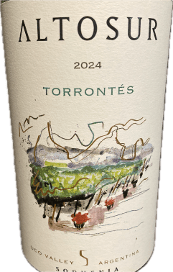
    • Torrontes — Altosur 2024 from the Sophenia Family (Uco Valley, Argentina)
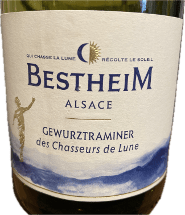
    • Gewurztraminer – Bestheim Alsace 2021 de Chasseurs de Lune

    Both are pretty aromatic. Both scream flowers. Like English Garden potency.  But structurally? Very different. Especially with their levels of acid. 

    Torrontes – The High Acid 

    • Aromas: dried white flowers, chamomile, apple blossom, lemon rind.
    • Body: medium with a solid finish
    • Acid: unmistakably high

    It wasn’t sharp or sour – but it built. A rising puckering sensation that took over the longer I held it in my mouth.

    After swallowing, my mouth watered – but also felt oddly strippled, like the moisture had been pulled out and replaced with tension in my mouth. 

    A quick sip? Fine.

    Let it linger? That acid showed up with authority. 

    Gewurztraminer – The Low Acid

    The Gewurztraminer had a similar intensity of aroma and palate. 

    • Aromas: elderflower, chamomile, white blossom, lemon juice, pear juice.
    • Body: similar to the Torrontes. While less flat than most wines from this grape, it still presented with its “flabby” texture.
    • Acid: Low, but….

    On its own, it felt fresh – brighter than many Gewurztraminers.

    But side-by-side?

    Flat. Like a soda left out too long.

    No puckering. No mouthwatering. Just soft, floral, settled.

    The Real Lesson: The Switch

    • Gewurztraminer –> Torrontes:
      • The Gewurzt felt easy and refreshing. Balcony-on-a-warm-day wine.Then the Torrontes hit.My mouth didn’t know what to do with all that acid. 
      • After the wine slid down my gullet, my lips were pursing, tongue dancing, instant intensity. 
    • Torrontes –> Gewurztraminer:
      • The Torrontes was crisp, balanced, fresh. Then the Gewurz…
      • Syrupy. Heavy. Almost like leftover sweetness in a glass left overnight on the counter. 

    So What Does “High Acid” Actually Feel Like?

    Not just “tart.”

    It’s:

    • Puckering
    • Mouthwatering
    • Slightly drying
    • Makes you want food
    • Makes you want another sip.

    That physical reaction – that’s your tell.