Tag: acid

  • The Shape of Acid

    Movement Part 2: Getting’ Jiggy With It

    To continue exploring acid movement, I’m bringing back the Sauvignon Blanc from the last post and pairing it with another varietal: Grüner Veltliner.

    Both are high-acid Old World expressions, with the Grüner hailing from Austria. They share some overlapping flavor characteristics, but their personalities differ. Sauvignon Blanc leans heavily into greenery, while Grüner can show green notes but tends toward the spicy and savory, with its own distinctive character.

    The Sauvignon Supercharged Star

    • Wine: Charme de Loire Sauvignon Blanc 2025, Vin de Pays
    • Producer: Jean Marie Reverdy & Fils
    • Viticulture details: old vines on flint and sand hillsides.
    • Aroma: Pronounced aroma, jumping out of the glass like SB often does. Passion fruit is prominent, surprising given its French origins. The typical SB greenery of dried herbs, particularly Mediterranean scrub and thyme. Lemon zest.
    • Flavors: Palate has similar notes, but I welcome the less passion fruit-iness! The structure leads, like a typical Old World wine, with additions of minerality, flintiness, and dried grass.
    • Acid:
      • The potent acid first starts as a circle tight around my tongue. Then it becomes more of a thick acid blanket around my tongue.
      • The circle continues to expand, encircling more of my tongue until the acidity eventually wraps around my entire mouth.
      • In addition to the growing circular acid shape, there’s a tickling element. My tongue wiggles around as if trying to scratch the different parts of mouth where the acid is prickling me.

    When I drink the Sauvignon after the Grüner Veltliner:

    • Like when I drank the SB after the Vinho Verde (see Movement Part 1), this wine again loses some of its dimensional movement. It falls flat after the undulating shape of the Austrian white.
    • I can still sense the high acid, but the circular shape feels less structured even after the very active Veltliner. Rather than even a strong circular ring, it feels more like a dashed circular border.

    The Vorticose Veltliner

    • Wine: Engabrunn, Grüner Veltliner, Kamptal DAC, 2023
    • Producer: Steinschaden
    • Aroma: A little less aromatic, but still strong at medium plus. Also expressing green notes, but more in the realm of grass and dried thyme. With added lemon and floral notes of gardenia.
    • Flavors: Lighter body than the Sauvignon with a medium finish. Medium plus intensity of flavors, with additional notes of white pepper, and savory notes like mushroom.
    • Acid:
      • The equally high acid is very striking at first sip. But then I found myself thinking, “Oh, no, it’s not really that acidic.” As I continue my swirl, the wine pings all around my mouth. I rethink my acid analysis once again: “It is quite high!” I silently nod to myself.
      • There is an up-and-down nature to the acid shape. Master of Wine Nick Jackson, in his book “Beyond Flavour,” describes Grüner as a “rollercoaster,” which captures exactly what I experience: a swelling, sinking, and surging once again.

    When I drink the Grüner after the Sauvignon Blanc: The Grüner’s surging and falling is intensified. This is the exact opposite effect for the other three pairings, which had lessened their shape’s intensity when sipped after the other wine. The up and downswings feel both more prominent and faster in repetition. It’s like that rollercoaster became more of a “hyper coaster” than your typical carnival ride.

    The Structural Summary: The Rollercoaster of (Acid) Love

    The Sauvignon lost some of its star power after both the Loureiro and the Grüner.

    Vinho Verde’s Loureiro lost its shower pressure when sipped after the Sauvignon.

    Both experienced changes in their acid movement: lessened intensity, diminished shape, or reduced movement.

    But the Grüner was different. Its rollercoaster intensified when tasted after the Sauvignon. Rather than losing momentum, its surges and dips became more pronounced and faster. Did that second surge to the apex make its acidity overpower the other wine? Or did the Sauvignon somehow set the stage for the Grüner’s more dramatic expression?

    Now I’m curious how the Grüner will stand up against Portugal’s Loureiro. I’ll tackle that in Movement Part 3!

  • The Shape of Acid

    Movement Part 1: You Spin Me Right ‘Round

    We’ve explored linear acid shapes, both horizontal and vertical, and looked at the square shapes that high acid varietals can create. Now it’s time to add dimension. Varietals that express their acidity in more dynamic ways: expanding, shifting, and dancing around the mouth. This is part 1 of a 3-part “movement” series.

    The Set-Up: Let’s Move Tonight

    I picked two high acid white varietals that seemed to offer different kinds of movement: Sauvignon Blanc and Loureiro. Sauvignon Blanc often leans into green notes.

    Vinho Verde, of which Loureiro is one of that wine region’s primary grapes, typically offer a more citrus-driven expression. To keep the comparison within the Old World, I chose a French Sauvignon Blanc and a Portuguese Vinho Verde.

    The Sauvignon Supernova

    • Wine: Charme de Loire Sauvignon Blanc 2025, Vin de Pays
    • Producer: Jean Marie Reverdy & Fils
    • Viticulture details: old vines on flint and sand hillsides.
    • Aroma: Pronounced aroma, jumping out of the glass like SB often does. Passion fruit is prominent, surprising given its French origins. The typical SB greenery of dried herbs, particularly Mediterranean scrub and thyme. Lemon zest.
    • Flavors: Palate has similar notes, but I welcome the less passion fruit-iness! The structure leads, like a typical Old World wine, with additions of minerality, flintiness, and dried grass.
    • Acid:

    The potent acid starts as a circle wrapped around my tongue. Then it becomes more of a thick acid blanket around my tongue. It continues to grow until it seems to wrap around my entire mouth.

    There’s also a prickly, tickling sensation. My tongue wiggles around as if trying to scratch the different parts of mouth where the acid is tingling.

    • When I drink the Sauvignon Blanc after the Loureiro:

    It’s more static. The prickliness disappears. It’s still circular in my mouth, but not the ever-growing circular shape from before. The supernova salsa dance has become more of a slower waltz.

    Quinta do Ameal Loureiro White Wine BottleThe Virtual Vinho Verde Shower

    • Wine: 2023 Vinho Verde, Lima Valley, Loureiro
    • Producer: Quinto do Ameal
    • Viticulture details: On the right bank of the Lima River on yellow granite bedrock with granite sand and clay topsoil on 5–25-year-old vines.
    • Aroma: Less pronounced aroma than the SB, but still a good showing. Shows a greater depth of citrus with lemon zest, lemon juice, and lemon curd. Also expresses minerality, flint, and saline on the nose.
    • Flavors: Medium body with lemon zest pushing forward on the palate. A medium plus intensity of flavors including lime peel, wet stone, and citrus tartness. There is a nice balance with some earthy and bready undertones.
    • Acid:

    The acid starts at the roof of my mouth and trickles downward. There’s an initial fizzy spritz before the sensation reaches my tongue, then spreads to the bottom and sides of the mouth. Like a refreshing acid rinse, washing through the mouth from top to bottom.

    Master of Wine Nick Jackson in his book “Beyond Flavour” describes Vinho Verde as a “shower” –like a refreshing sea spray.

    • When I drink the Loureiro after the Sauvignon Blanc:

    There’s a lighter feel to the wine. A lighter perception of the acid. I know it’s still quite acidic, but it feels less so in my mouth. It becomes more of the “rinse” and less of an intense “power shower”.

    The Structural Summary: Moving In & Out and All About

    The Sauvignon Blanc delivered a circular expansion: an acid supernova, growing in intensity and spreading outward like a big bang.

    Loureiro offered something entirely different, with acidity trickling from the roof of my mouth downward in a refreshing shower.

    These wines reminded me that acidity isn’t just about intensity or a fixed shape. It can move, expand, prickle, and rinse. And the order in which we taste wines can change how we perceive that movement.With these two wines, the acid didn’t just have a shape. It had choreography.

  • The Shape of Acid: Looking our Wine Square in the Eye

    After peaking the vertical acid structure and feeling like I could identify horizontal acid shapes in my sleep, I expanded my acid shape journey: squares, waves, rainfalls, and more.

    Let’s look at some “square-like” shapes next!

    The Set-Up: Let’s Get Fair and Square

    To compare two different square-like acid shapes, I again chose two grape varieties with naturally high levels of acidity: Assyrtiko and Albariño. 

    This keeps acid intensity out of mind as we sip so we can focus entirely on where the wine hits. Both of these varieties share a remarkably similar flavor palates: crisp, citrus, zesty lemon, and minerality.

    To taste them in their purest expression, I selected benchmark examples from their respective homelands: an Assyrtiko from Greece and an Albariño from Spain. 

    The Assyrtiko Sandwich: Feredini Art. Karamolegos Winery 2023 (Santorini, Greece)

    • Aroma:  Lime, earthiness, light smoke, salinity. 
    • Flavors: Light lean and crisp citrus – lemon peel, lime zest. Minerality, dry stone.
    • Acid: High, with an almost square-like acid feel in my mouth.

    Drunk alone, this wine makes me want to stretch my lips long and pucker at the same time. 

    The acid locks into a square-like perimeter. If I pucker, it softens the top and bottom pressure; if I grimace, it lessens the tension on the sides.

    But I pucker more. It’s clear the acid is strongest at the top and bottom of my mouth.

    The acid is strongest at the top and bottom. It isn’t a full-mouth sensation; it doesn’t surround my mouth. 

    Taking a sip after the Albariño, the roof-and-bottom palate “sandwich” feels even more extreme. I only want to pucker to counteract the crushing horizontal lines.

    The Albariño Anvil: Fento Wines Eulogio Pomares “Bico da Ran” 2025 (Rías Baixas, Spain)

    • Aroma:  lemon and lime peel and zest.
    • Flavors: crisp and zesty, intensely lemon and lime, with layers of zest, peel and pith.
    • Acid: High, prickly all over mouth. Almost like a spritz-like mouthfeel. 

    At first sip, the wine threatens to occupy a full square shape. But as I focused, the sensation on the roof of my mouth subsides. The acid migrates entirely to the columns on the side of each cheek. 

    It created a shape more like this:

    I————–I

    Basically, it was an anvil…or just the sides of the box. I think that Master of Wine Nick Jackson in his book “Beyond Flavour” referred to it as “wall-to-wall.”

    Sipping the Albariño directly after the Assyrtiko highlights this contrast beautifully: the center clears out, and the acid clamps down hard on the cheeks.

    The Structural Summary: Closing the Box

    The Assyrtiko stretched across my palate, but it was far more than a flat line. It built the horizontal boundaries—the floor and the ceiling—like a structural sandwich.

    The Albariño reached across my mouth, but it wasn’t a standard linear profile either. It erected the vertical walls on my cheeks, shaping the sides of the box.

    Because these two high-acid, saline, citrus-driven wines can easily be mistaken for one another in a blind tasting, mapping these “square” metaphors is exactly how you solve the puzzle. One wine frames the top and bottom; the other locks in the sides. Together, they complete the square geometry of acid.

  • The Shape of Acid: Up, Down, and All Around

    Acid is more than just high and low. That’s usually the first step in describing a wine—and one of the earliest concepts I understood in my wine education.

    But as my palate developed, I started hearing my fellow students use a whole new vocabulary: vibrant, bright, tingly, austere, energetic.

    I’m sure they’d been saying these words all along. I just hadn’t been ready to hear them.

    As my understanding expanded, so did my confusion.

    Vibrant vs. energetic – what’s the difference? 

    Bright vs. Vivid – aren’t those the same?

    Tingly vs. Prickly – just different words for the same sensation?

    To me, these terms felt subjective. Personal. Not particularly useful when trying to identify a wine—especially in a blind tasting. 

    High, medium, and low made sense. They were fixed. Measurable. Reliable.

    But this new language? It felt…fluid.

    I needed something more structured.

    Then I came across Beyond Flavour: Wine Tasting by Structure by Nick Jackson – and everything clicked.

    Instead of vague descriptors, it offered a framework:

    • Horizontal vs. vertical acid. 
    • Back-palate or tongue. 
    • Square or spherical. 

    These weren’t abstract. They were observable.

    Let’s start the next acid journey with horizonal and vertical.

    The Horizontal vs. Vertical Set-Up

    To compare these shapes, I chose two white wines known for higher acidity: Chardonnay and Riesling.

    Chardonnay for its horizontal acid structure.

    Riesling for its vertical lift.

    To keep variables controlled, I stayed within France where winemaking approaches share some stylistic consistency. A Chardonnay from Burgandy and an Alsace Riesling. Both from the same 2021 vintage to exclude any aging differences.  

    The Burgundy Chardonnay: Louis Jadot Chablis Fourchaume Premier Cru 2021

    • Aroma: Strong, almost pronounced 
    • Flavors: dried herbs (thyme, marjoram), bergamot, lemon peel, green apple, wet stone.
    • Acid: High, with its signature horizontal acid shape.

    The acid is piercing across the tongue and into the sides of my cheeks. My instinct was to pull inward – to protect, to react. My tongue wagged from side-to-side, trying to soften the acidic sharpness. It’s a wide, lateral sensation. A horizontal stretch of my mouth.

    The Alsatian Riesling: Alsace Grand Cru Edmond Rentz 2021

    • Aroma: Medium high aroma, slightly restrained for Riesling, but consistent with France.
    • Flavors: dried lemon, bergamot, flint, hay, oil, petrol, wax.
    • Acid: High, and distinctly vertical.

    The sensation starts under my lower lip, soon being felt on the top of my mouth. It doesn’t spread outward but lifts up through the center of my mouth toward the roof. My response is immediate: a tightening, a pucker.

    The Final Distinction

    These wines had more in common than expected:

    • Higher levels of aroma and acid
    • overlapping flavors (although some distinct differences)
    • minimal to no oak influence
    • minimal aging characteristics

    But the shape of their acid was unmistakably different. 

    The Chardonnay stretched outward – wide, lateral, pushing across the palate.

    The Riesling lifted upward – focused, vertical, driving through the center of my mouth.

    Same level of acid. Completely different experience. 

  • It’s All About that Ac…id: The Highs and Lows of a Wine’s Acid

    When I first started tasting wines “academically,” structure was new territory. 

    Flavors? I had those down to the minutiae–fresh-picked vs. bruised, toasted vs. roasted, star anise vs. liquorice, or gardenia vs. generic white blossom. Designing over a dozen New Years’ Day Rose Floats gave me confidence in my floral and fruit notes. My baking passion covered pastry and spice. Being a foodie rounded out the savory side.

    But now I was being asked to describe acid, tannin, and body—and not just the level, but the character. As if acid had a personality.

    I remember thinking: Can I just get a simple lesson on high vs. low acid first?

    The Set-Up

    For this side-by-side, I chose two wines with similar flavor profiles. It’s easy to confuse flavor with structure—especially when citrus tricks your brain into assuming high acidity.

    So instead of citrus, I went floral: 

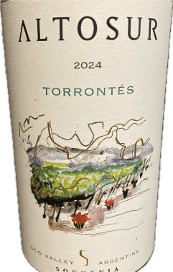
    • Torrontes — Altosur 2024 from the Sophenia Family (Uco Valley, Argentina)
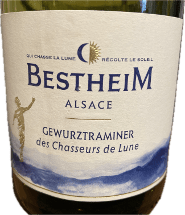
    • Gewurztraminer – Bestheim Alsace 2021 de Chasseurs de Lune

    Both are pretty aromatic. Both scream flowers. Like English Garden potency.  But structurally? Very different. Especially with their levels of acid. 

    Torrontes – The High Acid 

    • Aromas: dried white flowers, chamomile, apple blossom, lemon rind.
    • Body: medium with a solid finish
    • Acid: unmistakably high

    It wasn’t sharp or sour – but it built. A rising puckering sensation that took over the longer I held it in my mouth.

    After swallowing, my mouth watered – but also felt oddly strippled, like the moisture had been pulled out and replaced with tension in my mouth. 

    A quick sip? Fine.

    Let it linger? That acid showed up with authority. 

    Gewurztraminer – The Low Acid

    The Gewurztraminer had a similar intensity of aroma and palate. 

    • Aromas: elderflower, chamomile, white blossom, lemon juice, pear juice.
    • Body: similar to the Torrontes. While less flat than most wines from this grape, it still presented with its “flabby” texture.
    • Acid: Low, but….

    On its own, it felt fresh – brighter than many Gewurztraminers.

    But side-by-side?

    Flat. Like a soda left out too long.

    No puckering. No mouthwatering. Just soft, floral, settled.

    The Real Lesson: The Switch

    • Gewurztraminer –> Torrontes:
      • The Gewurzt felt easy and refreshing. Balcony-on-a-warm-day wine.Then the Torrontes hit.My mouth didn’t know what to do with all that acid. 
      • After the wine slid down my gullet, my lips were pursing, tongue dancing, instant intensity. 
    • Torrontes –> Gewurztraminer:
      • The Torrontes was crisp, balanced, fresh. Then the Gewurz…
      • Syrupy. Heavy. Almost like leftover sweetness in a glass left overnight on the counter. 

    So What Does “High Acid” Actually Feel Like?

    Not just “tart.”

    It’s:

    • Puckering
    • Mouthwatering
    • Slightly drying
    • Makes you want food
    • Makes you want another sip.

    That physical reaction – that’s your tell.