• The Shape of Acid: Up, Down, and All Around

    Acid is more than just high and low. That’s usually the first step in describing a wine—and one of the earliest concepts I understood in my wine education.

    But as my palate developed, I started hearing my fellow students use a whole new vocabulary: vibrant, bright, tingly, austere, energetic.

    I’m sure they’d been saying these words all along. I just hadn’t been ready to hear them.

    As my understanding expanded, so did my confusion.

    Vibrant vs. energetic – what’s the difference? 

    Bright vs. Vivid – aren’t those the same?

    Tingly vs. Prickly – just different words for the same sensation?

    To me, these terms felt subjective. Personal. Not particularly useful when trying to identify a wine—especially in a blind tasting. 

    High, medium, and low made sense. They were fixed. Measurable. Reliable.

    But this new language? It felt…fluid.

    I needed something more structured.

    Then I came across Beyond Flavour: Wine Tasting by Structure by Nick Jackson – and everything clicked.

    Instead of vague descriptors, it offered a framework:

    • Horizontal vs. vertical acid. 
    • Back-palate or tongue. 
    • Square or spherical. 

    These weren’t abstract. They were observable.

    Let’s start the next acid journey with horizonal and vertical.

    The Horizontal vs. Vertical Set-Up

    To compare these shapes, I chose two white wines known for higher acidity: Chardonnay and Riesling.

    Chardonnay for its horizontal acid structure.

    Riesling for its vertical lift.

    To keep variables controlled, I stayed within France where winemaking approaches share some stylistic consistency. A Chardonnay from Burgandy and an Alsace Riesling. Both from the same 2021 vintage to exclude any aging differences.  

    The Burgundy Chardonnay: Louis Jadot Chablis Fourchaume Premier Cru 2021

    • Aroma: Strong, almost pronounced 
    • Flavors: dried herbs (thyme, marjoram), bergamot, lemon peel, green apple, wet stone.
    • Acid: High, with its signature horizontal acid shape.

    The acid is piercing across the tongue and into the sides of my cheeks. My instinct was to pull inward – to protect, to react. My tongue wagged from side-to-side, trying to soften the acidic sharpness. It’s a wide, lateral sensation. A horizontal stretch of my mouth.

    The Alsatian Riesling: Alsace Grand Cru Edmond Rentz 2021

    • Aroma: Medium high aroma, slightly restrained for Riesling, but consistent with France.
    • Flavors: dried lemon, bergamot, flint, hay, oil, petrol, wax.
    • Acid: High, and distinctly vertical.

    The sensation starts under my lower lip, soon being felt on the top of my mouth. It doesn’t spread outward but lifts up through the center of my mouth toward the roof. My response is immediate: a tightening, a pucker.

    The Final Distinction

    These wines had more in common than expected:

    • Higher levels of aroma and acid
    • overlapping flavors (although some distinct differences)
    • minimal to no oak influence
    • minimal aging characteristics

    But the shape of their acid was unmistakably different. 

    The Chardonnay stretched outward – wide, lateral, pushing across the palate.

    The Riesling lifted upward – focused, vertical, driving through the center of my mouth.

    Same level of acid. Completely different experience. 

  • It’s All About that Ac…id: The Highs and Lows of a Wine’s Acid

    When I first started tasting wines “academically,” structure was new territory. 

    Flavors? I had those down to the minutiae–fresh-picked vs. bruised, toasted vs. roasted, star anise vs. liquorice, or gardenia vs. generic white blossom. Designing over a dozen New Years’ Day Rose Floats gave me confidence in my floral and fruit notes. My baking passion covered pastry and spice. Being a foodie rounded out the savory side.

    But now I was being asked to describe acid, tannin, and body—and not just the level, but the character. As if acid had a personality.

    I remember thinking: Can I just get a simple lesson on high vs. low acid first?

    The Set-Up

    For this side-by-side, I chose two wines with similar flavor profiles. It’s easy to confuse flavor with structure—especially when citrus tricks your brain into assuming high acidity.

    So instead of citrus, I went floral: 

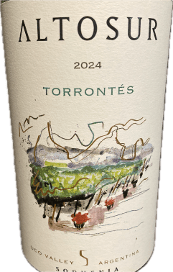
    • Torrontes — Altosur 2024 from the Sophenia Family (Uco Valley, Argentina)
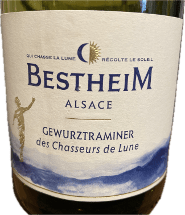
    • Gewurztraminer – Bestheim Alsace 2021 de Chasseurs de Lune

    Both are pretty aromatic. Both scream flowers. Like English Garden potency.  But structurally? Very different. Especially with their levels of acid. 

    Torrontes – The High Acid 

    • Aromas: dried white flowers, chamomile, apple blossom, lemon rind.
    • Body: medium with a solid finish
    • Acid: unmistakably high

    It wasn’t sharp or sour – but it built. A rising puckering sensation that took over the longer I held it in my mouth.

    After swallowing, my mouth watered – but also felt oddly strippled, like the moisture had been pulled out and replaced with tension in my mouth. 

    A quick sip? Fine.

    Let it linger? That acid showed up with authority. 

    Gewurztraminer – The Low Acid

    The Gewurztraminer had a similar intensity of aroma and palate. 

    • Aromas: elderflower, chamomile, white blossom, lemon juice, pear juice.
    • Body: similar to the Torrontes. While less flat than most wines from this grape, it still presented with its “flabby” texture.
    • Acid: Low, but….

    On its own, it felt fresh – brighter than many Gewurztraminers.

    But side-by-side?

    Flat. Like a soda left out too long.

    No puckering. No mouthwatering. Just soft, floral, settled.

    The Real Lesson: The Switch

    • Gewurztraminer –> Torrontes:
      • The Gewurzt felt easy and refreshing. Balcony-on-a-warm-day wine.Then the Torrontes hit.My mouth didn’t know what to do with all that acid. 
      • After the wine slid down my gullet, my lips were pursing, tongue dancing, instant intensity. 
    • Torrontes –> Gewurztraminer:
      • The Torrontes was crisp, balanced, fresh. Then the Gewurz…
      • Syrupy. Heavy. Almost like leftover sweetness in a glass left overnight on the counter. 

    So What Does “High Acid” Actually Feel Like?

    Not just “tart.”

    It’s:

    • Puckering
    • Mouthwatering
    • Slightly drying
    • Makes you want food
    • Makes you want another sip.

    That physical reaction – that’s your tell. 

  • Fish Out of Water…or Just Out of Wine?

    When I first started in the various wine classes – at a local winery or through monthly Smithsonian tastings, I was like everyone else: just looking to try a few new wine  without committing to a full bottle…in case I didn’t like what was inside. 

    Some were there to explore. Some were deeply passionate. Some just needed a Friday night activity during Covid. And a few were tagging along in support of the wine lover in their life. 

    I fell somewhere in those first two groups.

    When I started Wine & Spirits Education Trust (WSET), that international certification institution in wine, spirits, beer, and more, I found a similar mix. 

    Level 1 was a 2-day weekend course with about 10 other casual drinkers learning the basics.

    By Level 2, things escalated. Six weeks of classes, a larger group, and a few few wine professionals joining in.

    Then came Level 3.

    Longer classes. 

    Deeper dive into regions, climate, soil, vineyard management, and winemaking. Nearly 100 grape varieties to memorize. Essays. Blind tastings.

    And suddenly, I was one of only two people not “in the business.” 

    My classmates? Sommeliers, distributors, wine shop managers.

    Me?

    “I’m a boring government policy wonk. She sells it, he recommends it, they distribute it… I just buy and drink it. Thank you, next.”

    ——————–

    That dynamic didn’t change in Level 4.

    Many of us moved through the Diploma together, including one retired classmate who spent every fall volunteering at a vineyard harvest. 

    Meanwhile, I kept hearing that old Sesame Street tune in my head:

    “One of these things is not like the other…one of these things just doesn’t belong.”

    I’d felt it before – when I was performing flying trapeze in my 50s alongside performers in their 20s.

    And now? Same song. Different setting. Same feeling. 

    ——————-

    My classmates had a head start.

    They knew vineyard names, producers, and regions far beyond “France” or “Napa” – we’re talking St. Emilion, Stellenbosch, and Carneros. 

    When we started writing full tasting essays – a full page essay per wine – they were already discussing structure, acid, tannin, and finish.

    I was still swirling my glass.

    Acid? My knowledge was based in 2 years of college chemistry. 

    Body? That Bellamy Brothers song now replaced that Sesame Street ditty. 

    —————

    While I certainly was playing a lot of catch up, I learned my strengths.

    I could identify flavors with precision. 

    Not just citrus, but bergamot peel. 

    Not just floral, but a slightly bruised magnolia blossom that has just fallen from the tree. 

    Not just meaty, but smoked, thinly sliced prosciutto. 

    Tannins made sense to me, too.

    Not just “stalky” – stalky like celery, not asparagus. There’s a difference! 

    Not just “ripe” –ripe like a fresh picked black plum. 

    Not just “green” – green like an underripe strawberry, not raspberry. 

    I still found myself struggling.

    Someone recommended, Beyond Flavour by Nick Jackson – a deep dive into how wine feels, not just tastes.

    It helped. A lot. 

    Now with a few years of tasting and learning under my belt, I combined this new knowledge to create the full picture…or full glass!

    I would have loved to have had some of these basics like “this is high acid, this is low acid” lessons. 

    Something like “this wine’s acid is felt all around your mouth vs. this wine’s acid is felt only at the sides of your mouth.” 

    Once I started thinking about wine that way – physically, structurally – everything changed. 

    My tasting improved. My exam performance improved.

    More importantly, I understood why I liked what I liked…and why I didn’t like those wines that just weren’t for me. 

    So that’s where we’re starting.

    For my first series of posts, we’re diving into acid.

    Side-by-side comparisons.

    High vs. low.

    How acid feels and moves in your mouth. Get ready for some puckering!

  • Shake, Pour, n’ Sip: Drinks, Stories (and a little bit of science)

    I’ve always enjoyed a good tipple. 

    Maybe it’s my 64% Scottish and Irish lineage. 89% if you add in the beer-guzzling Germanic regions. 96% with my Viking heritage. 

    I even wrote a sonnet and submitted it to a contest by Guinness to win a trip to Ireland.

    Come hither to me and be my beer, 

    and we shall at the others sneer.

    That Whisky, Wine, and juniper fields,

    Rum, or aged brandy never yields.

    And there I will sit near Castlemaine, 

    and tipple your topaz with a silver stein.

    I didn’t win that contest. Nor did I win a free trip to Ireland.

    But years later, I ended up getting plenty of “free” trips there as an airline pilot.

    —————–

    Then came 2020.

    Stuck in my one-room mini studio, I didn’t want to just sit there and drink my way to the other side of it. So I started taking classes—lots of them—while enjoying cocktails in my pandemic-forced isolation.

    I’d visited a bar in London a few times on my trips across the pond, and their bartender – well-known on the London scene – started offering virtual cocktail classes.

    Because of the 5-hour time difference, my Friday night cocktail hour started at 2pm East Coast time in my one-room kitchen/office/living room/bedroom.

    The classes started foundational: Classic Gin Cocktails, Classic Vodka drinks, Classic Whisky mixes. He soon expanded his offerings: holiday-themed, Tiki, cocktails through the ages, modern riffs, even the Queen’s favorites. 

    After a couple dozen classes, I wanted more. 

    I found a local winery doing virtual wine tastings. Then breweries with beer clubs that included virtual educational tasting events. Then a monthly Amaro club with six curated Amaros, including cocktail fixings we’d shake and sip together during our monthly Zoom. 

    It was fun. It was social. It was delicious.

    But it was just drinking. 

    I wanted the what, why, and how. 

    The art and science behind what was in my glass. 

    I found a local Wine School—one of the few in the U.S. certified by the Wine & Spirits Education Trust (WSET) – one of the top accrediting bodies in the world. 

    I signed up for the WSET Level 1 Certification in Wine, thinking that would be enough. It was one of the first things I attended in-person after the couple years of Covid lockdown. 

    But it wasn’t enough. 

    Before I knew it, I was enrolling in the next level. And the next. I could blame it on the wine, but education has always been my real addiction. 

    —————-

    Fast forward a few years, and I’ve completed WSET’s International Diploma in Wine—Level 4. Nearly four years of studying vineyard management, grape varieties, climate, soil, wine law, the global business… and, of course, a lot of tasting.

    I didn’t graduate with distinction.

    But I’ve always had a knack for translating complex, technical ideas into something people can actually understand—and enjoy.

    Across aviation, education, policymaking, and social services, I’ve taught a lot of subjects. Breaking things down into bite-sized, practical insights? That’s my thing.

    —————-

    That’s what this is.

    A place where I’ll share vineyard visits, bottles I feel are worth opening (or not), and the occasional dive into things like acid levels and tannins. 

    And while I still prefer a super bitter hoppy IPA (shhhh…don’t tell my glass of wine!), wine has become an integral part of my drinking life.

    Drinks, stories, and a better understanding of what’s in your glass.

    Let’s shake, pour, and sip together!

  • The Shape of Acid: Up, Down, and All Around

    Acid is more than just high and low. That’s usually the first step in describing a wine—and one of the earliest concepts I understood in my wine education. But as my palate developed, I started hearing my fellow students use a whole new vocabulary: vibrant, bright, tingly, austere, energetic. I’m sure they’d been saying these…

  • It’s All About that Ac…id: The Highs and Lows of a Wine’s Acid

    When I first started tasting wines “academically,” structure was new territory.  Flavors? I had those down to the minutiae–fresh-picked vs. bruised, toasted vs. roasted, star anise vs. liquorice, or gardenia vs. generic white blossom. Designing over a dozen New Years’ Day Rose Floats gave me confidence in my floral and fruit notes. My baking passion…

  • Fish Out of Water…or Just Out of Wine?

    When I first started in the various wine classes – at a local winery or through monthly Smithsonian tastings, I was like everyone else: just looking to try a few new wine  without committing to a full bottle…in case I didn’t like what was inside.  Some were there to explore. Some were deeply passionate. Some just…

  • Shake, Pour, n’ Sip: Drinks, Stories (and a little bit of science)

    I’ve always enjoyed a good tipple.  Maybe it’s my 64% Scottish and Irish lineage. 89% if you add in the beer-guzzling Germanic regions. 96% with my Viking heritage.  I even wrote a sonnet and submitted it to a contest by Guinness to win a trip to Ireland. Come hither to me and be my beer, …